Enrichment at Out of Africa Wildlife Park: Why It Matters for Animal Well-Being
At Out of Africa Wildlife Park, enrichment isn’t just a “nice extra”
— it’s a fundamental part of keeping our animals healthy, happy, and thriving. You might notice unusual objects, creative feeders, or enrichment items throughout our habitats — and there’s a meaningful reason behind every one.
What Is Animal Enrichment?
Animal enrichment refers to activities, items, and experiences that encourage natural behaviors, spark curiosity, and provide mental and physical stimulation. Just like humans, animals benefit from having choices each day — things that challenge their minds, encourage movement, and allow them to interact with their environment the way they would in the wild.
Enrichment can take many forms:
✔ textured objects
✔ hidden food puzzles
✔ novel scents and sounds
✔ items that promote foraging and play
These enhancements help animals make decisions, solve problems, and live more fulfilled lives.
Encouraging Natural Behaviors with Enrichment
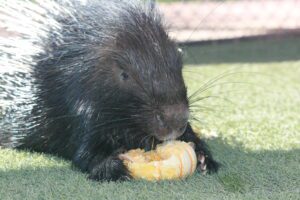
Animals in captivity don’t have to survive — but they should have opportunities to thrive. Enrichment supports:
- Mental stimulation – Problem-solving and novel experiences prevent boredom and keep animals engaged.
- Physical exercise – Encouraging natural movement patterns like digging, climbing, and foraging.
- Emotional well-being – Reducing stress and fostering positive interactions with caretakers.
- Species-specific activities — For example, predator species may benefit from scent trails or hidden food to simulate hunting instincts.
Research shows that enrichment increases behavioral diversity and reduces stress-related behaviors in captive animals. That’s good for both the animals and the people who love watching them.¹
Real Enrichment, Real Animals
Take a look at some enrichment in action at Out of Africa:
Rhino Challenge: Big Tire Puzzle
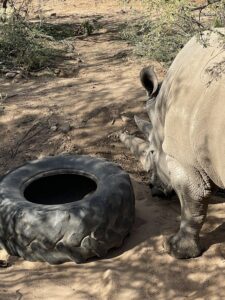
You might spot a massive tire placed in the rhino habitat — and yes, that’s intentional!
Rhinos are naturally curious and strong. They investigate objects with their horns and muzzles just like they would explore fallen logs, water holes, or mud wallows in the wild. A large tire provides:
- A safe object to push and roll
- Textural variation for sensory interest
- A structure for hiding food and encouraging foraging
Did you know? White rhinos can weigh up to 5,000 pounds and use their wide lips to graze on grasses and explore objects in their environment.²
Lion Lounge: Sensory Enrichment Break
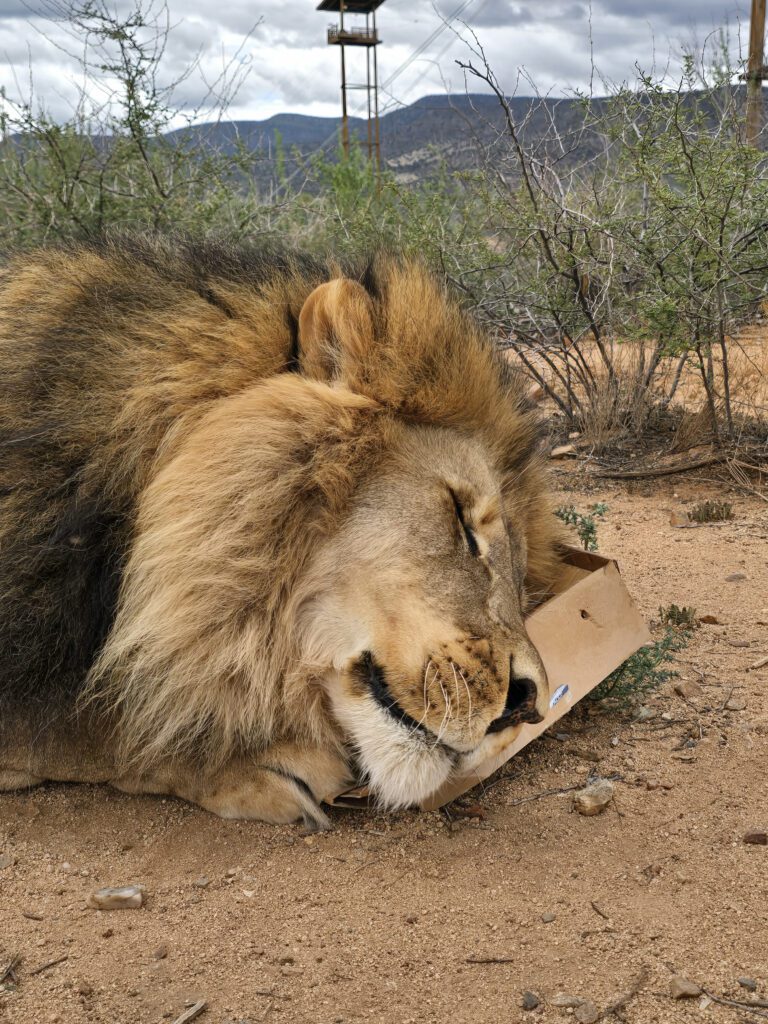
Another example is enrichment designed for large carnivores like lions. Hidden scents, food puzzles, and objects with new textures encourage lions to use their powerful senses and natural instincts.
Lions in the wild spend significant time stalking, investigating scents, and exploring their territories — enrichment replicates that thrill on a smaller scale.³
Fun fact: A lion’s sense of smell is critical for detecting prey and communicating with pride members over long distances.³
Why Enrichment Is Essential — Not Optional
Without enrichment, captive animals can become bored, stressed, or withdrawn. Even subtle changes — like a new scent, a textured ball, or a novel feeding device — can make a big difference.
Animal enrichment helps:
Reduce stress and repetitive behaviors
Build problem-solving skills
Encourage natural movement and play
Create positive keeper-animal interactions
A Closer Look: How You Can Help
When you visit Out of Africa:
- Observe the enrichment items — see what the animals choose to engage with!
- Watch for natural behaviors like sniffing, pawing, rolling, and investigating.
- Ask keepers about their enrichment strategies — they design experiences tailored to each species.
Every enrichment item serves a purpose — to nurture curiosity, support well-being, and enrich the lives of the magnificent animals in our care.
Learn More & Stay Connected
Help Support Animal Enrichment at Out of Africa Wildlife Park
Every enrichment item you see — from sensory objects to feeding challenges — is thoughtfully designed and maintained to support the animals’ physical and mental well-being. These programs take time, creativity, and resources, and donations play a vital role in making them possible.
When you donate to Out of Africa Wildlife Park, your contribution helps fund:
- Enrichment materials and habitat enhancements
- Ongoing animal care and wellness programs
- Conservation education and outreach
- The daily work of keepers who know each animal as an individual
If you’re inspired by the animals you meet and the enrichment you see during your visit, consider making a donation. Every gift — large or small — directly supports the animals in our care and helps us continue providing enriching, meaningful experiences every day.
👉 Donate to Support Animal Enrichment at Out of Africa Wildlife Park
Your support helps ensure that enrichment remains a core part of how we care for wildlife — not an extra, but a priority day.
Sources
¹ Association of Zoos & Aquariums — Benefits of Animal Enrichment
² National Geographic — White Rhino Facts
³ Smithsonian National Zoo — Lion Behavior & Biology